What happens when one mine, one port, or one policy decision can stall an entire hardware product line?
For tech manufacturers, raw material sourcing is no longer a procurement back-office task-it is a strategic risk that shapes cost, resilience, compliance, and speed to market.
Critical minerals, rare earth elements, recycled metals, and advanced polymers now sit at the center of geopolitical competition, ESG scrutiny, and supply chain volatility.
Developing alternative sourcing strategies is how hardware companies move from reactive shortage management to controlled, diversified, and future-ready supply networks.
What Alternative Raw Material Sourcing Means for Tech Hardware Supply Chains
Alternative raw material sourcing means reducing dependence on a single mine, country, supplier, or refining route for critical inputs used in semiconductors, batteries, printed circuit boards, servers, smartphones, and electric devices. In practice, it combines supplier diversification, recycled materials, nearshoring, secondary minerals, and better supply chain risk management.
For tech hardware companies, this is not just a procurement trend. It directly affects production cost, lead times, product availability, ESG compliance, and resilience during export restrictions or logistics disruption. A laptop manufacturer, for example, may source recycled aluminum for casings while qualifying additional suppliers for rare earth magnets used in speakers and cooling fans.
The key is to treat raw materials like strategic assets, not simple commodities. Teams often use platforms such as Assent, Resilinc, or SAP Ariba to map suppliers, track compliance documents, monitor geopolitical risk, and identify weak points below Tier 1 suppliers.
- Cost control: Compare virgin materials, recycled inputs, and regional suppliers before price spikes hit production budgets.
- Compliance: Support responsible sourcing requirements for conflict minerals, battery materials, and environmental reporting.
- Continuity: Build qualified backup sources before a shortage stops assembly lines.
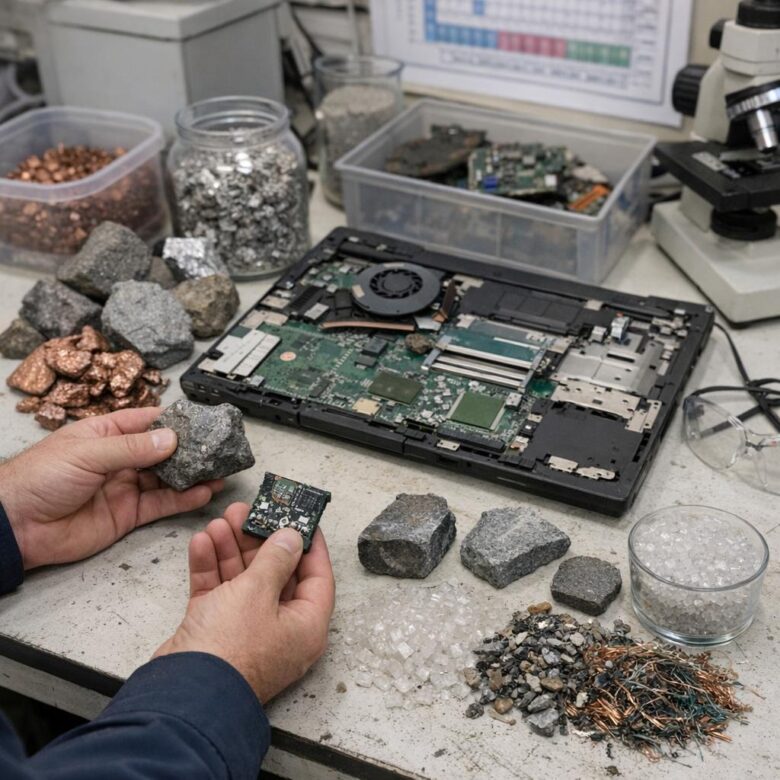
A practical example is battery supply chains shifting toward recycled lithium, nickel, and cobalt from end-of-life electronics and EV batteries. This can lower exposure to mining delays while supporting circular economy goals. The real benefit comes when engineering, procurement, and compliance teams work together early, because changing a material later can trigger expensive testing, certification, and device redesign.
How to Identify, Qualify, and Validate Non-Traditional Material Suppliers
Start by mapping the exact material requirement before searching for alternative suppliers: grade, purity, tolerances, certifications, logistics constraints, and total landed cost. For tech hardware, a recycled aluminum vendor, urban mining processor, or specialty ceramics supplier may look attractive on price, but small variations in composition can affect thermal performance, device durability, and warranty risk.
Use supplier discovery platforms such as Thomasnet, ImportGenius, or Resilinc to screen companies beyond your usual distributor network. Look for evidence of stable production capacity, ISO 9001 or IATF 16949 certification, conflict minerals documentation, REACH/RoHS compliance, and experience serving electronics, semiconductor, battery, or precision manufacturing customers.
- Commercial check: compare MOQ, lead time, payment terms, freight cost, and price adjustment clauses.
- Technical check: request samples, material safety data sheets, certificates of analysis, and process capability data.
- Risk check: review country exposure, financial stability, ESG reporting, and backup production sites.
A practical example: a hardware manufacturer evaluating reclaimed copper for charging cables should not approve the supplier based only on sustainability claims. The procurement and engineering teams should run conductivity tests, plating adhesion checks, accelerated aging, and pilot production trials before signing a volume contract.
In real sourcing projects, the best non-traditional suppliers are often not the cheapest at first quote. The stronger choice is usually the vendor that can document traceability, pass third-party lab validation, respond quickly to engineering changes, and support long-term supply chain resilience without creating hidden quality costs.
Common Risks to Avoid When Diversifying Critical Minerals, Metals, and Component Inputs
Diversifying suppliers can reduce supply chain risk, but doing it too quickly can create new cost, quality, and compliance problems. A common mistake is approving an alternative source based only on unit price, without checking yield loss, logistics costs, import duties, and qualification expenses. For example, switching to a lower-cost rare earth magnet supplier may look attractive until motor performance testing reveals higher failure rates in heat-sensitive devices.
Another risk is assuming that “country diversification” equals true resilience. If two suppliers operate in different countries but depend on the same refinery, smelter, or battery-grade chemical processor, the exposure is still concentrated. Procurement teams should map tier-2 and tier-3 dependencies using platforms such as Resilinc, Everstream Analytics, or supplier risk modules in SAP Ariba.
- Unqualified substitutions: Always validate materials against engineering specifications, RoHS, REACH, conflict minerals reporting, and customer warranty requirements.
- Weak supplier audits: Review ESG practices, cybersecurity controls, financial stability, and traceability documentation before signing long-term contracts.
- Poor inventory planning: Dual sourcing does not help if safety stock, lead times, and demand forecasts are not updated in ERP systems.
In real hardware programs, the biggest issue is often internal alignment. Engineering, finance, legal, and procurement may evaluate suppliers differently, which slows approvals and increases hidden costs. A practical approach is to build a risk scorecard that compares total landed cost, quality history, geopolitical exposure, certification status, and ramp-up capacity before committing to a new metals, minerals, or component supplier.
Key Takeaways & Next Steps
Alternative sourcing is no longer a contingency plan; it is a competitiveness lever. Tech hardware companies should treat material resilience as a design, procurement, and governance decision, not a last-minute purchasing response. The strongest strategies balance cost, qualification speed, supplier concentration, geopolitical exposure, recyclability, and performance risk.
- Prioritize materials with high disruption impact and limited substitutes.
- Qualify secondary suppliers before shortages occur.
- Link sourcing choices to product roadmaps and compliance requirements.
- Invest where resilience protects margin, delivery reliability, and customer trust.
The Yiptung Trade Editorial Team creates practical, research-based content about Asian supply chains, cross-border B2B payments, import and export compliance, supplier management, international logistics, and trade risk. Our articles are reviewed using official regulatory, customs, banking, and industry sources whenever possible. Yiptung Trade provides educational information and does not replace advice from licensed customs brokers, attorneys, tax professionals, or financial compliance specialists.