What if your factory relocation quietly changes the product your customers already approved?
Moving production is not just a logistics project-it is a controlled disruption to equipment, people, processes, suppliers, utilities, and inspection routines that directly shape product quality.
Even small changes in machine alignment, environmental conditions, material handling, or operator workflow can create defects, delays, and costly requalification issues after restart.
This article explains how to protect consistent product quality before, during, and after a factory relocation through disciplined planning, validation, documentation, and quality control checkpoints.
What Product Quality Consistency Means During a Factory Relocation
Product quality consistency during a factory relocation means customers receive the same product performance, appearance, packaging quality, and compliance standards before, during, and after the move. It is not just about restarting machines in a new building; it is about proving that the new production environment can meet the same specifications, tolerances, and inspection requirements without costly defects or delivery delays.
In practical terms, this requires controlling every variable that may change during the relocation: equipment alignment, operator training, raw material storage, calibration schedules, humidity, temperature, workflow layout, and quality control checkpoints. For example, a plastic injection molding company may move the same machines to a new facility, but if cooling water temperature or mold setup procedures change, parts can begin showing warping, sink marks, or dimensional variation.
A strong relocation quality plan usually focuses on three areas:
- Validating production equipment with trial runs and first-article inspection.
- Maintaining documented quality standards through SOPs, checklists, and traceability records.
- Using quality management software such as MasterControl, ETQ Reliance, or SAP Quality Management to track nonconformance, corrective actions, and audit readiness.
From experience, one of the biggest risks is assuming that “same machine” means “same result.” It rarely does without process validation. Even a small change in floor leveling, compressed air pressure, material handling, or inspection device calibration can affect product quality, increase scrap cost, and trigger customer complaints.
So, quality consistency means building evidence that the relocated factory can repeatedly produce approved products under real operating conditions. That evidence protects revenue, customer trust, regulatory compliance, and the overall return on investment of the factory relocation project.
How to Transfer Processes, Equipment, and Quality Controls Without Disruption
Start by treating the factory relocation like a controlled manufacturing change, not just a moving project. Before any equipment is disconnected, document each production process with current machine settings, calibration records, maintenance history, tooling requirements, inspection points, and approved work instructions. A practical tool such as MasterControl or a cloud-based QMS can help keep version-controlled SOPs, quality assurance checklists, and validation documents accessible to both the old and new site teams.
Move critical equipment in phases whenever possible, especially if customer orders cannot stop. For example, a packaging manufacturer may relocate one production line first, run parallel quality checks at both facilities, and only transfer the next line after confirming seal strength, print registration, and dimensional tolerances match approved specifications. This staged approach reduces downtime, protects product quality, and makes equipment installation, rigging services, and industrial calibration easier to manage.
- Label cables, fixtures, dies, sensors, and spare parts before removal to avoid setup errors.
- Recalibrate machines after installation using certified calibration services and keep the certificates on file.
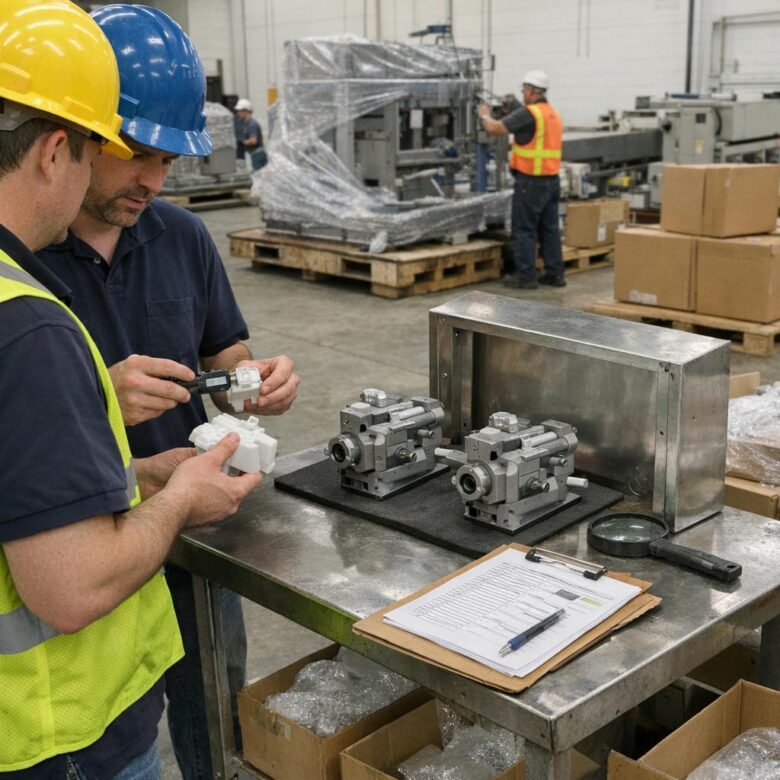
- Run first-article inspection, pilot batches, and process validation before releasing full production.
One detail that often gets missed is operator familiarity. Even when the same equipment is used, new floor layout, utilities, air pressure, humidity, or material flow can affect output. Have experienced operators, maintenance technicians, and quality control staff sign off together after trial runs; they usually catch small issues faster than a relocation checklist alone.
Common Factory Relocation Mistakes That Cause Product Quality Problems
One of the biggest mistakes is moving production equipment without a documented baseline. Before shutdown, record machine settings, cycle times, inspection results, calibration certificates, and approved process parameters in a quality management system such as MasterControl or your MES platform.
Another common issue is treating installation as a maintenance task instead of a controlled validation project. A press, CNC machine, filling line, or SMT machine can pass a basic power-on test but still produce defects if leveling, vibration control, compressed air quality, humidity, or tooling alignment changed during the move.
- Skipping equipment requalification after installation
- Using untrained operators before standard work is updated
- Restarting production before first-article inspection is approved
I have seen a packaging line produce uneven seals after relocation simply because the new area had different ambient temperature and air flow near the sealing station. The machine was not “broken”; the process window had shifted, and nobody had verified it with a short capability run.
Poor supplier and material control is another hidden risk. If raw materials, labels, gauges, molds, or fixtures are stored incorrectly during the move, you may face traceability gaps, expired inventory, damaged tooling, or nonconforming parts that only appear after customer complaints.
The safest approach is to use a relocation checklist tied to your quality control plan, preventive maintenance schedule, calibration services, and ERP inventory records. Do not release full production until engineering, quality, maintenance, and operations sign off on trial batches, inspection data, and documented corrective actions.
The Bottom Line on How to Maintain Consistent Product Quality During a Factory Relocation
Consistent quality during a factory relocation is not achieved by moving equipment alone; it depends on controlling change. Treat the relocation as a quality-critical project, not a logistics task. Before approving full production, verify processes, people, materials, equipment settings, inspection methods, and supplier readiness under real operating conditions.
The best decision is to restart gradually, measure aggressively, and escalate any deviation early. If quality data is unstable, delay volume ramp-up rather than risk customer complaints, recalls, or brand damage. A disciplined relocation protects output, customer trust, and long-term profitability.
The Yiptung Trade Editorial Team creates practical, research-based content about Asian supply chains, cross-border B2B payments, import and export compliance, supplier management, international logistics, and trade risk. Our articles are reviewed using official regulatory, customs, banking, and industry sources whenever possible. Yiptung Trade provides educational information and does not replace advice from licensed customs brokers, attorneys, tax professionals, or financial compliance specialists.