
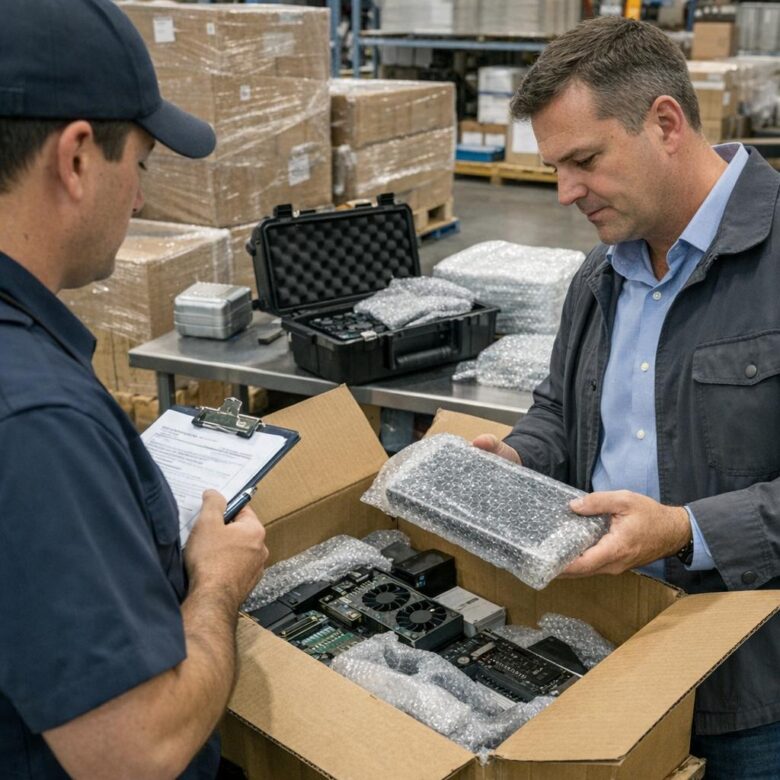
What happens when a million-dollar tech shipment is ready to sell-but customs will not release it?
For high-value commercial imports like servers, semiconductors, networking hardware, medical devices, and enterprise electronics, a customs hold is not a routine delay. It can trigger missed deployment windows, contract penalties, inventory shortages, and serious cash-flow pressure.
Most held-at-customs cases are caused by fixable issues: incomplete documentation, valuation questions, classification errors, licensing gaps, denied-party concerns, or inconsistent product details across shipping records.
This guide explains how to identify the reason for the hold, respond effectively to customs, reduce storage and demurrage costs, and prevent the same delay from disrupting future high-value tech shipments.
Why High-Value Commercial Tech Imports Get Held at Customs
High-value commercial tech imports are often held because customs officers need to verify risk, valuation, compliance, and end use before release. Servers, networking equipment, medical devices, drones, semiconductor components, and encrypted hardware attract closer review because they may involve import duties, export controls, product safety rules, or dual-use technology restrictions. Even a small mismatch between the commercial invoice, packing list, HS code, and airway bill can trigger a customs clearance delay.
In practice, many holds come from documentation that looks “almost right” but not complete enough. For example, a shipment of enterprise routers may be delayed if the invoice says “network devices” without model numbers, country of origin, ECCN details, or a clear declared value. I’ve seen brokers resolve this faster by submitting datasheets, purchase orders, and manufacturer specifications through platforms like ACE in the U.S. or carrier portals such as DHL Express and FedEx Trade Networks.
- Incorrect HS code: Misclassification can affect duty rates, compliance checks, and customs bond requirements.
- Undervalued shipment: Customs may question declared value when commercial tech equipment has a high resale price.
- Regulatory gaps: FCC, FDA, BIS, or CE-related documents may be required depending on the product and destination.
The key issue is not always the product itself; it is whether the paperwork proves exactly what the product is, what it costs, and whether it is legally allowed to enter the market. For expensive technology imports, using a licensed customs broker, landed cost calculator, and compliance screening tool can reduce avoidable storage fees, demurrage charges, and missed delivery deadlines.
How to Resolve Customs Holds with Accurate Documentation, Classification, and Valuation
When high-value tech imports are held at customs, the fastest fix is usually not “waiting it out” but correcting the record with clean, consistent documentation. Start by matching the commercial invoice, packing list, purchase order, bill of lading or air waybill, and payment proof so the product description, quantity, Incoterms, country of origin, and declared value all tell the same story.
For servers, network switches, semiconductor equipment, medical devices, or enterprise laptops, vague descriptions like “computer parts” can trigger a customs inspection. Use precise HS code classification, model numbers, serial numbers where relevant, and technical datasheets from the manufacturer; platforms like Descartes or a licensed customs broker’s import compliance software can help validate tariff codes before submission.
- Documentation: provide commercial invoice, packing list, freight invoice, insurance certificate, and end-use statement if requested.
- Classification: confirm the HS/HTS code against product function, not just product name.
- Valuation: include assists, royalties, tooling, freight, and cargo insurance when customs valuation rules require it.
A common real-world issue: an importer declares refurbished enterprise routers at a low unit cost, but the invoice does not explain condition, warranty status, or discount basis. Customs may suspect undervaluation, so the importer should submit the resale agreement, refurbishing records, original MSRP context if available, and proof of payment to support the declared transaction value.
If the shipment is time-sensitive, ask your freight forwarder or customs clearance services provider to file a post-entry correction or response packet immediately. A concise cover letter that explains the discrepancy, references each attachment, and states the requested release action can reduce back-and-forth and protect duty cost accuracy.
Strategies to Prevent Future Customs Delays for Commercial Technology Shipments
Preventing customs delays starts before the purchase order is approved. For high-value commercial technology imports such as servers, networking equipment, medical devices, or industrial tablets, confirm the HS code, country of origin, export control status, and required permits before the shipment leaves the supplier.
One practical step is to build a pre-shipment compliance checklist inside a trade management platform like Descartes, SAP Global Trade Services, or a customs broker portal. In real operations, I’ve seen delays happen because the invoice said “computer parts” while the packing list described “encrypted network modules”; that mismatch alone can trigger inspection.
- Use precise product descriptions, including model numbers, serial numbers, chipset details, and commercial use case.
- Attach technical datasheets, FCC or CE documentation, import licenses, and end-use statements when relevant.
- Review Incoterms, declared value, insurance cost, and freight charges so duty calculations match customs expectations.
Work with a customs broker before the shipment is booked, not after it is held. A broker can flag restricted technology, dual-use goods, anti-dumping duty exposure, or missing compliance documents that may increase storage fees and demurrage costs.
For recurring shipments, create a master product database with approved HS classifications, duty rates, supplier details, and document templates. This reduces manual errors and helps finance teams estimate landed cost more accurately before buying expensive enterprise hardware or specialized electronic components.
Finally, choose logistics providers that offer customs visibility, not just tracking updates. Platforms like Flexport or DHL Trade Automation Services can help monitor clearance status, document gaps, and customs entry issues early enough to avoid expensive port delays.
Summary of Recommendations
Customs delays on high-value tech imports are rarely “just paperwork problems”-they are commercial risk events. The right response is to act quickly, document precisely, and escalate only with evidence.
- If the shipment is time-critical: engage the broker, carrier, and importer of record immediately.
- If valuation, classification, or licensing is unclear: pause assumptions and obtain specialist review.
- If delays repeat: treat compliance as a supply chain control, not an afterthought.
The best decision is the one that protects delivery timelines without creating future audit exposure.

The Yiptung Trade Editorial Team creates practical, research-based content about Asian supply chains, cross-border B2B payments, import and export compliance, supplier management, international logistics, and trade risk. Our articles are reviewed using official regulatory, customs, banking, and industry sources whenever possible. Yiptung Trade provides educational information and does not replace advice from licensed customs brokers, attorneys, tax professionals, or financial compliance specialists.