
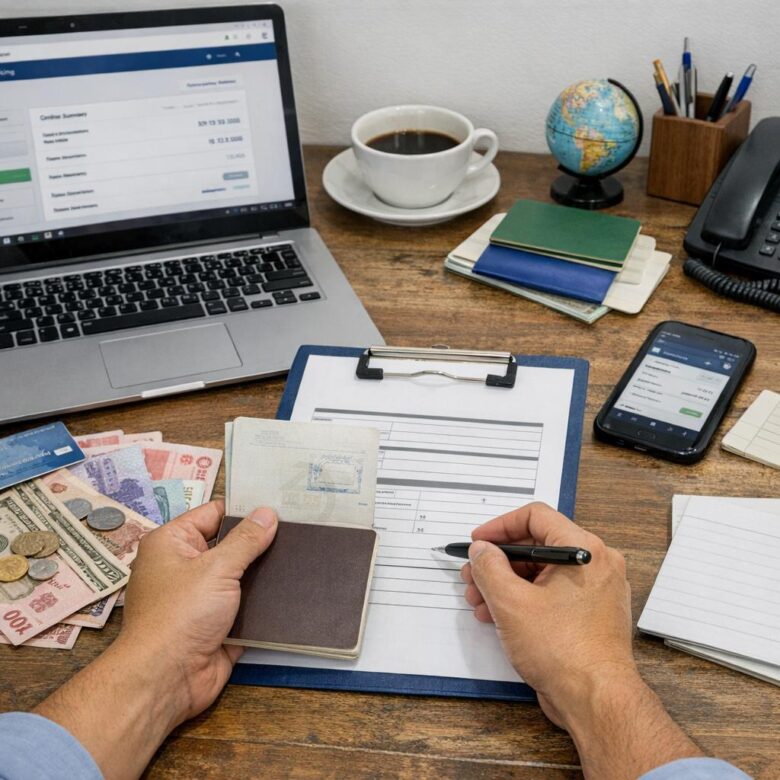
Are slow cross-border payments quietly damaging your supplier relationships?
In Asia, where payment speed, local banking rails, and currency handling can directly affect pricing and production timelines, relying only on overseas transfers often creates unnecessary friction.
Setting up localized Asian bank accounts can help businesses pay suppliers faster, reduce transfer costs, avoid FX delays, and build stronger trust with vendors across key markets.
This guide explains how localized accounts work, where they matter most, and what to consider before opening them for supplier payments.
What Localized Asian Bank Accounts Are and Why They Speed Up Supplier Payments
Localized Asian bank accounts are business accounts or virtual receiving accounts held in the same country or currency region as your suppliers. Instead of sending every invoice as an international wire transfer, you can pay vendors through local payment rails in markets such as Hong Kong, Singapore, China, Japan, Thailand, or Indonesia.
This matters because many Asian suppliers prefer domestic transfers. They are easier to reconcile, usually arrive faster, and often avoid intermediary bank charges, SWIFT delays, and unexpected foreign exchange fees that reduce the final payment amount.
For example, a U.S. ecommerce company sourcing packaging from a supplier in Shenzhen may lose time when paying from a U.S. dollar account via traditional wire. Using a multi-currency business account from a provider like Airwallex, Wise Business, or Payoneer, the buyer can hold funds, convert currency, and send a local-style payment that is simpler for the supplier to receive.
- Faster settlement: local transfers can clear more quickly than cross-border wires.
- Lower payment costs: fewer correspondent bank fees and better FX visibility.
- Better supplier trust: vendors see payments in familiar formats and currencies.
In practice, localized accounts are most useful for importers, Amazon sellers, manufacturers, sourcing agents, and companies with recurring supplier payments. The real benefit is operational: fewer payment issues, cleaner accounting records, and better cash flow planning when invoice due dates are tight.
How to Open and Configure Local Currency Accounts Across Key Asian Markets
Start by mapping supplier payment volume by country, then open local currency accounts where the savings justify the compliance work. For example, a Hong Kong trading company paying factories in China, Vietnam, and Thailand may keep HKD as its base account but add CNY, VND, and THB accounts to reduce foreign exchange fees, failed payments, and supplier reconciliation delays.
In most Asian markets, banks and fintech platforms will ask for company registration documents, beneficial ownership details, tax information, proof of business activity, and expected transaction volumes. Traditional banks such as HSBC, DBS, and UOB are useful for larger payment flows, while platforms like Airwallex or Wise Business can be faster for multi-currency accounts, virtual account numbers, and API-based supplier payouts.
- China: CNY payments often require careful invoice matching, beneficiary name accuracy, and awareness of capital control rules.
- Singapore and Hong Kong: These are practical hubs for managing USD, SGD, HKD, and offshore supplier payments.
- Japan, Korea, and Thailand: Local payment formatting matters, including bank codes, branch codes, and exact legal names.
Configure each account with payment approval workflows, daily transfer limits, user permissions, and accounting integrations before going live. In practice, the biggest operational issue is not opening the account-it is maintaining clean supplier master data, including bank names, SWIFT/BIC codes, local clearing codes, and currency preferences.
For finance teams, a good setup connects local currency accounts to ERP or accounting software such as NetSuite, Xero, or QuickBooks. This makes payment tracking, FX cost analysis, and supplier reconciliation much easier during month-end close.
Common Compliance, FX, and Payment Routing Mistakes to Avoid
One costly mistake is opening local Asian bank accounts without mapping the compliance requirements first. KYC, AML screening, beneficial ownership documents, tax residency forms, and local business licenses can vary widely between Singapore, Hong Kong, Vietnam, Indonesia, and China. In practice, I’ve seen supplier payments delayed for weeks simply because the payer’s invoice name did not exactly match the registered bank account name.
FX handling is another area where small errors become expensive. If you pay a Thai supplier in USD when their costs are in THB, they may add a hidden exchange-rate buffer to the invoice. Use foreign exchange services or treasury management software such as Airwallex, Wise Business, or Convera to compare conversion costs, lock rates where appropriate, and avoid unnecessary intermediary bank fees.
- Using the wrong payment rail: SWIFT may be reliable, but local clearing systems can be faster and cheaper for domestic supplier payments.
- Ignoring cut-off times: A payment sent after the local bank cut-off may not process until the next business day, especially before public holidays.
- Poor payment references: Missing invoice numbers or purchase order details can cause reconciliation problems for both finance teams.
Also avoid routing every payment through one regional hub without checking withholding tax, transfer pricing, and local banking rules. A Hong Kong account may work well for regional procurement, but paying Indonesian or Chinese suppliers may still require local documentation, purpose-of-payment codes, or supporting contracts. Build a simple payment routing matrix before scaling volume.
Final Thoughts on How to Set Up Localized Asian Bank Accounts for Faster Supplier Payments
Localized Asian bank accounts are most valuable when payment speed, supplier trust, and FX control directly affect your margins. The right setup depends on where your suppliers operate, how often you pay them, and whether local banking rules support your transaction model.
Practical takeaway: start with your highest-volume supplier markets, compare banking and fintech options, and confirm compliance requirements before opening accounts. If faster settlement reduces delays, disputes, or currency leakage, localization is not just an operational upgrade-it is a smarter payment strategy.
The Yiptung Trade Editorial Team creates practical, research-based content about Asian supply chains, cross-border B2B payments, import and export compliance, supplier management, international logistics, and trade risk. Our articles are reviewed using official regulatory, customs, banking, and industry sources whenever possible. Yiptung Trade provides educational information and does not replace advice from licensed customs brokers, attorneys, tax professionals, or financial compliance specialists.